One Day Workshop – Package your Way to New Markets. Oct 18th 2011

This looks like a great day for any food producer who is currently thinking about new or redesigned packaging. €50 for the day

It’s the first in a series (hopefully) from Teagasc, Enterprise Ireland and Bord Bia who have a working group tackling the issue of inadequate knowledge and skill sets in this crucial area to the food sector.

Full details from this link on the Teagasc website. Summary of session titles below.

* Packaging – an effective way to develop your brand.
* Regulatory up-date: labelling and food contact materials.
* Case Study: Innovation and added value through packaging.
* Global Market trends and technical innovations.
* The Retail perspective.
* State supports for packaging.
* Packaging strategy for your company

I am presenting a workshop in Dublin that morning so maybe able to attend the afternoon part of this. Otherwise I’d be there bright and early.

Keith

2 Kilkenny artisan food businesses share Joint National Organic Award

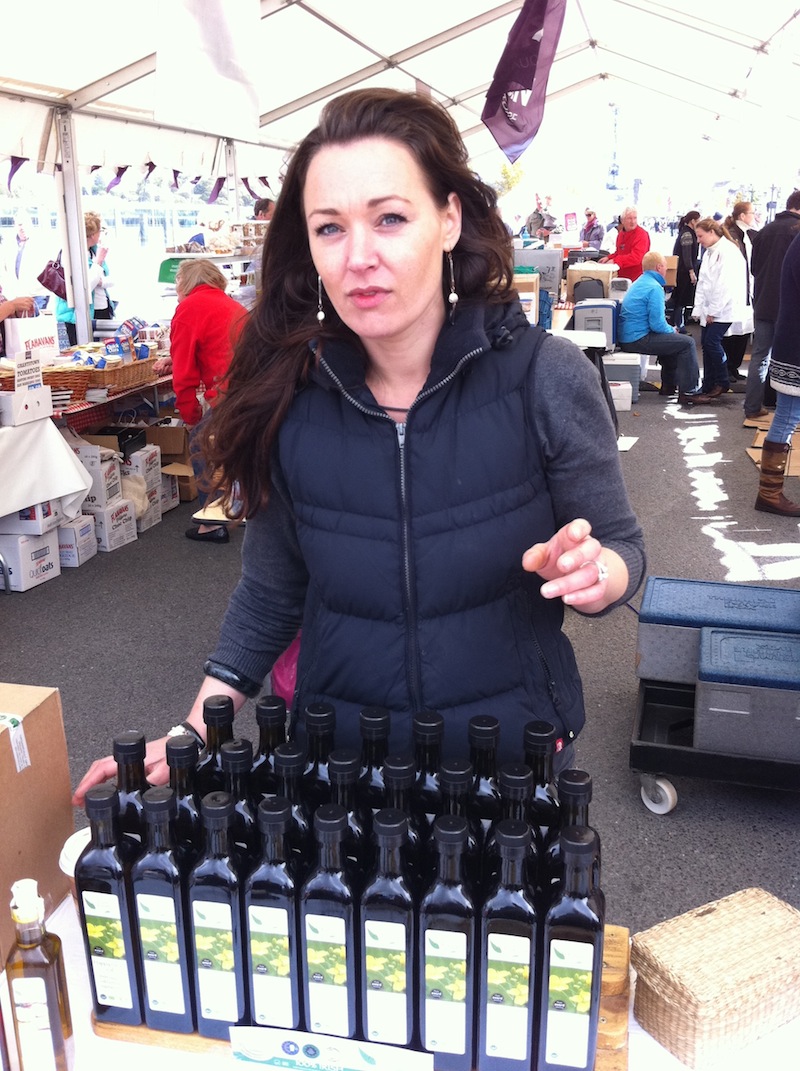
Just had a call from a delighted Julie Calder-Pott (Highbank Orchard Syrup) who told me that herself and Kitty Colchester (Second Nature Oil) have just won a joint Best Grocery Product Award in the Bord Bia National Organic Awards which were announced today.

Julie at the Amazing Grazing event in Waterford yesterday

Kitty at the same event

A worthy runner up in the same category was Pat Lawlor of Kilbeggan Organic Porridge fame.

You can see Pat in a recent post here.

Great news for the Klkenny duo :-). Congrats all

Keith

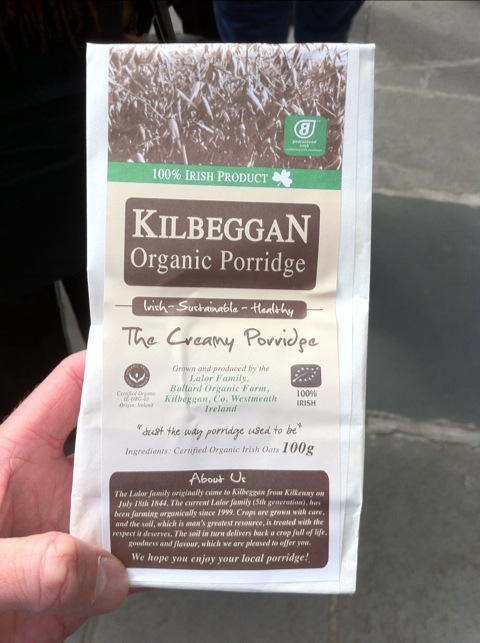
Kilbeggan Organic Porridge – packaging update

Pat Lawlor was at the GIY Gathering event I went to yesterday and I took the opportunity to say hello afterwards as a fan of his product.

He had some sample packs with him (I took 4 and gave them out during the Amazing Grazing event on the Quay) and he talked me through the changes in V2.

Based on feedback from retailers HR has stressed his Irishness. So the addition of 2 very visible Irish elements at the top and his address under the Creamy strapline is also in green.

And a more subtle change too. Kilbeggan is now in the font used on the Kilbeggan whisky labeling. Pat asked for and got permission to do so.

Now two consumer facing food products from the same area share a strong common visual feature. You have to love the way this oats farmer thinks, I do 😉

Keith

20110912-070009.jpg

20110912-070018.jpg

Enterprising Food Conference – Nicholas Dunne, Killowen Farm Yogurt

My third post from this conference held as part of the Harvest Festival in Waterford. Here are the first (Peelham Farm) and second (M&D Bakery).

Killowen Farm Yogurt: They took over Killowen Dairy from orginal producers. 3 of them (friends) took over and lost a pile of money over 12 months. Mentor came in (Wexford CEB appointed) and suggested trimming the team (out went the 2). He also took advice from a friend of his who ran an ice cream company.

So the friend sat down with them and asked them “Are you out of your heads?” – he kept it up for an hour just to make sure they were serious! They put in better processes and tried for 1 day manufacturing, 1 day packaging and it took them a couple of months to do that.

They consolidated the business and moved it back to their dairy farm (which was 8 miles away). From there they started to do some market research and then sold into new local stockists.
They then got a listing with Pallas Food via a Speciality Foods fair (Bord Bia run) in Dublin and that moved them into volume and then the food service area. Food service is now 30% of their business.
They supply into a number of local hotels with the blessing of Pallas Foods so they retain the direct relationship with chefs whose feedback is blunt, immediate and vital 🙂

He touched on HACCP – they got away with murder early on but now are completely compliant so they can trace back for each batch where the raw ingredients came from. He said this is crucial for working with new buyers.

He again said that the assistance of Wexford CEB vital to them.

Awards – these reflect their emphasis on pure ingredients. Great Taste awards, Blas na hEireann (Gold medal) and JFC Innovation awards – most innovative food company. (a 3 star great taste award and 10 1 star awards).

Funding – initially Leader and then Wexford CEB helped with an owners managers course and assisted with their website. They also use on average at least 2 mentors a year. Going forward they hope to approach Enterprise Ireland for assistance.

They backload via Pallas Foods.

Packaging. New packaging launched in the last weeks. It took months and months and was shortened via Bord Bia Vantage programme.

They do about 40% private label – Superquinn glass jar and also Aldi. He sees this as helping their growth and also lifts their standards a lot.

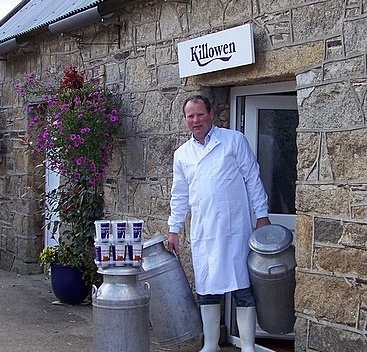
Above photo from my previous post on their redesign. Thanks to Nicholas – that was a frank and enjoyable presentation which I am sure many food producers will appreciate and learn from.

Keith

Enterprising Food Conference – Dermot Walshe, M&D Bakery

My second post from this conference held during the Harvest Festival in Waterford (see the first one here). They are raw notes and I have not edited them a whole lot.

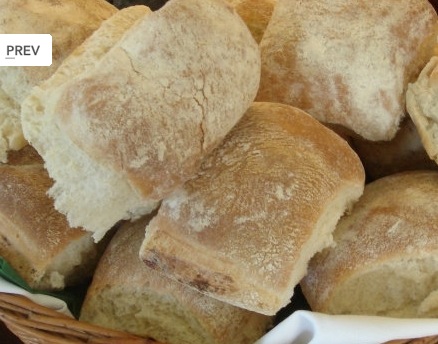
M&D Bakery. They are in business 25 years and the Blaa is their main product. Started in the 1690’s with the Hugenots who set up an area behind Reginalds Tower known locally as New Geneva. One of the businesses there was a bakery and they imported French flour which was used to make Pain Blanc. Leftovers from their main loaves were used to make smaller pans and it is believed that the Blaa was named as a shortened version of Blanc!

They soon spread and in the 1800’s and 1900’s there were always 10 to 12 bakeries in the City with up to 15,000 blaas made each day. In the 1990’s the number of 9 dwindled down to only 3 still going in Waterford.

Even with only 3 bakeries there are still 10,000 to 12,000 sold a day.

He then explained how the Blaa was given a Euro-torque award and that lead to a lot of coverage for the Blaa and joining Good Food Ireland helped enormously. They took advantage of that and featured in the Galway Volvo Ocean Race Green Dragon blaa sandwich.

After that (and the publicity which then followed) they extended to Electric Picnic, Oxygen and have recently been “listed” by the Guinness Storehouse as their sandwich bread of choice.

They are now thinking beyond the regions and moving to baking and freezing to extend distribution nationally (which fortunately the Blaa is well suited for).

In 2009 they were contacted about the idea of obtaining protected geographic status. They are hoping for PGI – Protected Geographic Indication.

This would be a strong selling point for Waterford and would would be applied for by the Waterford Blaa Bakers Association. The point is to keep commercial blaa manufacture alive in the City so the status would be the beginning of the story.

He shows a graph which showed the various countries which hold this designation  – France and Italy have over 150 designations each. The UK have over 50. We (Ireland) have 4.
Only 2 of those are actually available on the market 😦

Keith

Enterprising Food Conference – Scottish Borders Food Network & Peelham Farm

I was fortunate enough to be able to get to this event held as part of the Harvest Festival in Waterford and because of the lack of wifi in the venue I took notes during the presentations and will share them over a couple of posts. They are raw notes and I will not be editing them a whole lot.

This one was from Denise Daly Watson who spoke about a Food network she helped to set up and also a little about her own farm based food business.

Scottish Borders Food Network is a Leader funded project which started in 2006 – founded by businesses for businesses with a consensus approach. 61 members – primary producers as well as food hospitality providers (24 producers, 33 providers and 3 associates) Strong artisan focus

She said that their understanding of what consumers/customers what has helped them to add value [and hence to increase margins, keith]

As part of balance of committee 50:50 producers and providers.Their goals include promoting local Borders food, providing a forum for member businesses, tackling the distribution challenge and making the link between food and the environment.

Funding – they have received 100k over 2 years from Leader with matched funding from Local Authority. Also the Scottish Government is very supportive with a strong food policy.

Some of the Network members

Actions Taken:
* Employed a coordinator, created a brand and a website, showing with regional food and tourism events, chefs events to meet the producers.

* Accessability – this was a response to their civic responsibility and addresses the myth that local food is not everyone across the social divide.

* Post Leader Funding – increasing membership, bringing in more artisan producers. Stronger brand recognition.

* 5 year regional food strategy with trans-national collaboration to qualify for EU/Leader funding

* Address shortage of vegetable growers

Learnings to date. Consensus is important, this leads to member buy in. Communications are important to develop trust along the food chain.
Running a food network is complex – mixed profiles and requirements
Peelham

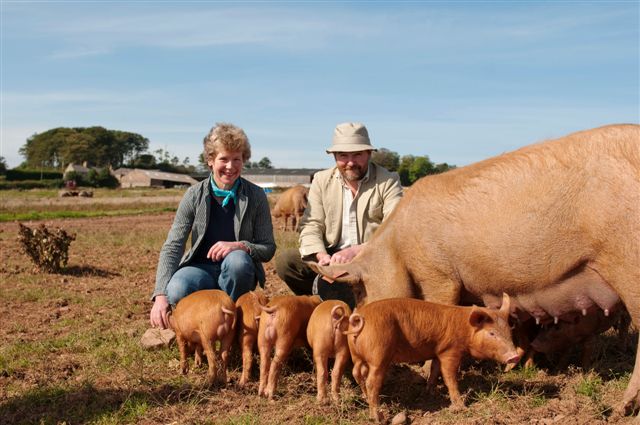
(Denise and her husband – photo from 5pm blog)

She runs Peelham Farm – they are organic and spent a lot of money developing a brand having realised the importance of that in their marketing.
Sustainability, transparency and taste – two of the things which are so important to them and they won a 2009 farm award because of that.
They use rare breeds and have learned the skills/trade of butchering. They sell to a number of Michelin star chefs.
They have an open farm – transparency. So they encourage farm visits.

Finally she said that their use of the internet will be extending and youtube to be added to their twitter and facebook portfolio.

[liked that presentation a lot, very passionate and inspiring speaker, keith]

Keith

Why bother? Bord Bia Food & Drink Industry Awards 2011 – Closing Monday.

The closing date for these is next Monday 12th September (entry here on their site – click on the relevant category on the left of that page to see online entry form).

The Why Bother is answered by them:

  • Our media partner, The Irish Times, will announce and profile all 18 shortlisted companies in early November.
  • Following the announcement of the overall category winners, at the Brand Forum End of Year Event on 22 November at Trinity College Dublin, they will feature in a two page feature in The Irish Times newspaper.
  • A short video interview with each of the 18 shortlisted companies will feature on the Bord Bia website.

So that is clear enough – this is about publicity in the mainstream media = increased sales (if distribution is in place). To take advantage of the shortlisting (and the award winning if you are that good) make sure you have your stockists listed on your website and also actively promote the shortlisting and the other companies listed on your Facebook and Twitter accounts (assuming you have them).

Categories (you can enter more than one)

  • The Exporting Award
  • The Branding Award
  • The Innovation Award
  • The Entrepreneurial Award
  • The Domestic Success Award
  • The Sustainability Award

I am looking forward to seeing the shortlist. Once again – details here on Bord Bia site.

Keith

Guest Post: The design of the Sarah’s Honey brand for Milleeven Fine Foods

Within this lies another tale – how does a daughter or son establish their own identity on an established brand. It needs to be tackled – otherwise they are just doing what their parent(s) did. I have known Eilis Gough (founder of Milleeven Honey) for many years but have never met Sarah her daughter.

However I was aware of Sarah’s products and brand and so asked Philip Darling from Concept Choice to do a guest post on how the brand and packaging came about.

The design of the Sarah’s Honey brand

“Milleeven Fine Foods, based in Kilkenny, Ireland, decided to launch a range of flavoured honey to the market place. They already produce traditional honey products, so wanted something different for the Irish, UK and international consumer.

Branding and Positioning
Our first stage was to work with Tessa O’Connell of Brand Edge, who hosted a branding and positioning workshop for Mileeven and a selected audience type, from retail buyers to consumers. The day was really useful in identifying the perceived view of honey products, company reputation, qualities and indeed what the ‘modern’ consumer was looking for in honey. We also knew that the UK marketplace was very competitive, with massive marketing budgets to push their products.

We looked at what made Mileeven different, things that the large companies couldn’t claim with any real consumer believability, a love of honey and a hands on involvement from an ‘artisan’ family producer. Once these values and propositions were marked up on the flip chart, coupled with the wonderful mother and daughter story, ‘Sarah’s Honey’ (the daughter’s name) was realised and born. The name and spirit of the brand fitted, was true and gave a real point of difference from their competitors.

Packaging and Labelling practicalities
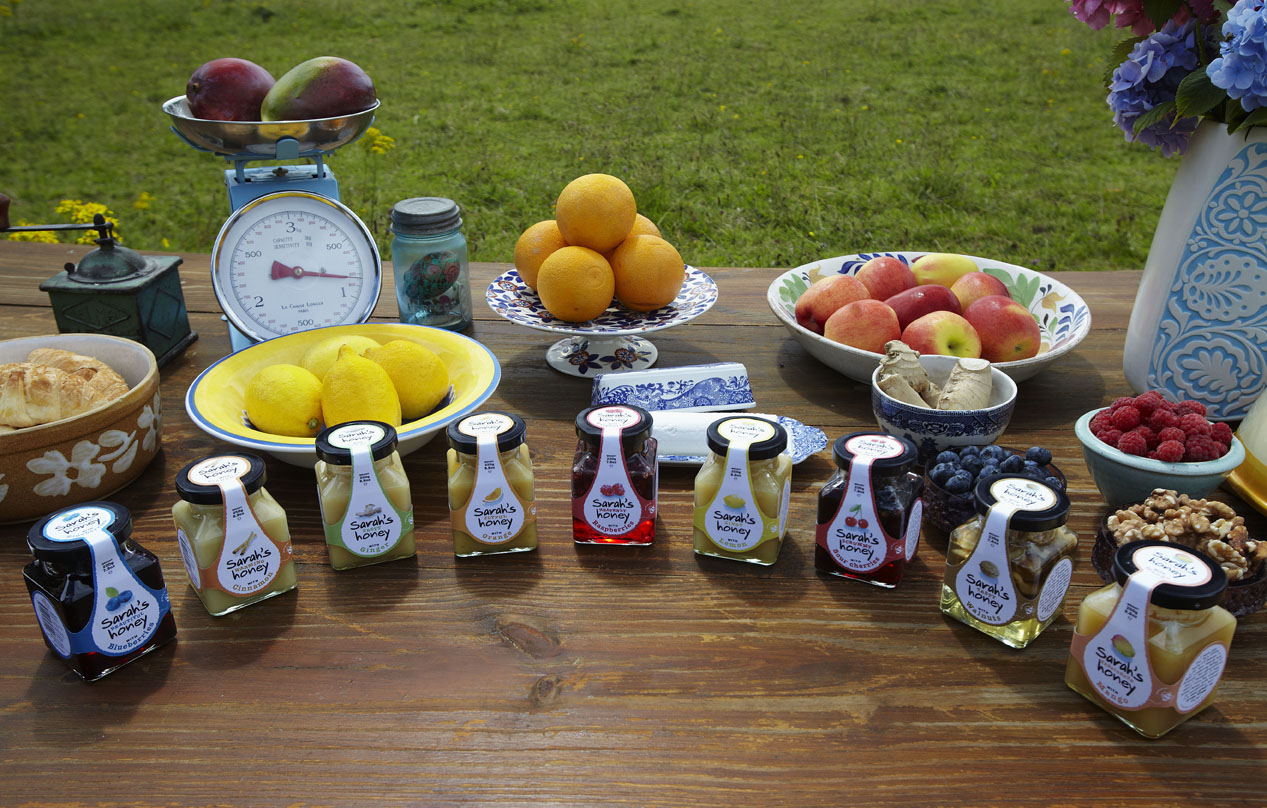
The next stage, was to look at the packaging practicalities and labeling of the new brand. Mileeven suggested a lovely glass jar that fitted that homemade ‘story’ and we decided to expand the label area to give it more shelf presence. A teardrop shape was conceived which had a secondary subtle effect, of ‘flowing’ honey.

Many typefaces were considered in the logo make-up but we settled on a ‘hand drawn’ effect which fitted well. A series of little watercolour illustrations were commissioned, again as if Sarah herself had created these for her ‘homemade’ production line. Each product also featured a different coloured border to assist content recognition and words such as ‘scrummy’ and ‘passionate’ to enhance the ingredient descriptions within.

Telling the Story – Video

As with any brand, the packaging is just part of the consumer experience, so to really extend the story, we conceived, shot and produced a video entitled ‘Sarah’s World’. Filmed over a couple of days on their farm (and in-between the showers) we created an atmospheric movie that showed Sarah within a rural environment, taking time out, writing, painting and collecting ingredients for her honey recipes. The whole video was then edited to look like a homemade super 8 film and wonderful music score commissioned to complement the visuals.

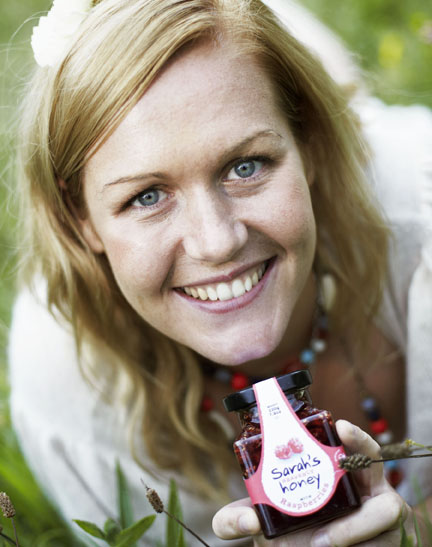
We also photographed Sarah and the full range of products for use on POS, PR, web and exhibition use. Some shots were taken quickly to capture a spontaneous feel, others took much longer to ensure everything was perfect in presentation. We also sourced vintage props and had lots of help from Eilis with family heirlooms and tablecloths.

The packaging, photography and video was then displayed in the London Food Fair of which they received lots of positive feedback and most importantly, samples requests and advance orders.

Overall, we really enjoyed the project, from brand generation right though to the packaging, photography and video. It was great too, to work with a client prepared to listen, trust and get involved in the marketing of the brand.

Philip Darling, Creative Director of Concept Choice

http://conceptchoice.com/

Great to see the exploration of the positioning using primary and secondary research right at the beginning of this project and also the extension into other media.

You can see the other food packaging guests posts in this series here.

Keith

2 great interviews – Birgitta in Burren Smokehouse, Valerie in Glenilen

Ailbhe is based in the UK and she writes a blog called Simplysplendiferous.

Two of her recent posts are interviews with Irish producers – both of whom have scaled their production without loosing their connection with the passion and core values that make a strong brand.

Burren Smokehouse

The first (linked here) explores the taste of both farmed and wild salmon (recently reintroduced) with Birgitta Curtin. Really smart website BTW – do not remember seeing this properly before.

Glenilen Fairy

In the second one (linked here) Ailbhe discusses brand design and solar power with Valerie Kingston.

While the solar power and planned water turbine get a paragraph of the interview those of you who are familiar with this business will know that Valerie and Alan’s dedication to renewables goes way beyond “lite green” and you do not pick that up from their website or communications generally.

I am looking forward to more in this “Introducing…” series 🙂

Keith

The Potential of the Traditional Irish Farm – Taste Council Summer School #futureisfood

Following posts from a Taste Council conference in Wicklow.

Full title of 1st session: AUTHENTIC FOOD CULTURE: REALISING THE POTENTIAL OF THE TRADITIONAL IRISH FARM

A significant proportion of Irish farm enterprises are officially categorised as economically unviable. An alternative route to viability is possible: one which aims to add value to Irish farm family produce by capitalising on environmental, social and cultural distinctiveness of this produce using the ‘Middle Agriculture’ Model.

Presentation:
Dr. Aine Macken Walsh, Teagasc

Presentation

Aine started with the standard incomes of farmers and looked at the proportion earned from various sources.

The majority of production happens at below cost – ie products are sold below cost and income subsidies are used to cover the gap.

She then showed that the number of farms is reducing – over 14 years 33,000 farms have disappeared and this has lead to a substantial increase in average farm sizes. It also means a reduction in the number of farmers.

Trends in Europe show a reduction in farmer numbers are matched with a negative impact on the social and economic rural environment. There is also an environmental impact as farmers get disassociated with the land they live on.

Routes towards viability?

* Lowest cost OR

* Differentiation

These 2 basic choices leave mid-sized farms at a disadvantage (US Dept of Ag) as they cannot specialise (too big) nor can they scale up (too small). They differentiate between vertically integrated open market sectors and focused niches.

She they showed that less that 5% of Irish farms have diversified and .4% have engaged in on-farm processing. (2011 study). [wow, that seems very low – I guess I have contact with a disproportionate number of the diversifying ones, Keith]

Barriers To Change

These range from economic through to social and cultural. The latter were interesting as as a generalisation farmers are hooked on producing crops or animals – that is what matters to them and their peers (occupational identity). They may lack the skill sets, experience or even exposure to alternatives.

Addressing the challenge

Both Product and Process need to be considered. Can a standard farm product be marketed from the farm as a premium item.

There could be demand for Middle Agriculture products – sustainably produced but not expensive. So a co-op of farmers working together in a region on a sustainable basis and connecting directly with consumers on the back of the local and regional heritage. Tell the story. [I am taking it that organic is not what is being discussed here, just a return to elements of more traditional farming, keith]

The Product

She reckoned here that most Irish farms fall within the sweet spot of this Middle Agriculture space – they are less intense than overseas equivalent & they usually have a family heritage and culture. They have an “authentic Irish richness”.

Reference now to Regina Sexton (UCC) and her work on Ireland’s authentic regional foods which would have an appeal to niche markets abroad.

A further point here is that Middle Agriculture compliments both the scaled commodity farming and also the artisan sector. There is “no revolution” required here – there is no enormous challenge in the mind set.

Farmers and the Value Chain

Interesting here – she says that farmers need to move up the marketing and distribution chain here so that they morph from input suppliers to partners. This will bring economic benefits as well as strengthen the link with consumers.

She said here that she did not seeing this applying to artisan producers – they are individual businesses with individual products.

What needs to be done?

Back to the future – the Cooperative model.

Traditionally – Local coops with 10 to 15 members and then Centralised coops with 1,000’s of members – getting closer to a private or public limited company.

Alternative – federated coops which comprise of local coops linked together at national level with common branding and marketing. These would need facilitators and would promote:

* Genuine Farm Ownership

* Good Governance

* Exploring regional food heritage

* Best practice in farming

More on federated coops. A common seal to endorse food products, 3rd party certification, professional marketing. There is a working group in place on this including Teagasc, Bord Bia, ICOS and a host of others.

Discussion

Chair:
Kevin Sheridan, TASTE Council, Sheridan’s Cheesemongers

Panel:
Dr. Aine Macken Walsh (Teagasc)
Denis Carroll (Kerry Quality Lamb Group)
Peter Young (Farmer, Producer, Journalist)
Pat Smyth (General Secretary, IFA)
Marian Byrne (Department of Agriculture, Food and the Marine)
Mark Winterbotham (Farmer Producer, Director Organic Trust)

Introductions

Mark – locally grown products and they are price setters, not takers. Very interesting point.

Denis – he belongs to a coop of farmer producers which he reckons could fit in with the Federated Coop Middle Agriculture model outlined.

Discussion on the commodity route. Aine – leads to rural depopulation and there is a delinkage between producers and the market which then homogenises the product.

Mention from floor of NZ dairy sector – massively increased farm sizes and very depopulated country with the disappearance of the family farm. This also has an impact on tourism and a lack of variety of end products (farm cheeses for example). This would mean that Irish food has no differentiation on the global market. The family farm can support the food story. (contributor is Ben)

Next from floor – Liam Dunne. Spoke about the importance of Middle Agriculture farmers who have been largely ignored due to focus on scale and intensity. However they provide the majority of employment. He agreed that they loose out economically because they sell into the homogenous market. They are also ignored at policy level because they are underrepresented [where are the IFA in this?, keith]

He reckoned that the review of the Single Farm Payment can be used to lubricate the process of moving this sector to the Federated model.

Pat Smyth (IFA) reckoned that Teagasc have important part to play to meaningfully support this. He also said that they have 89,000 members, average size 64 acres and a lot of part time farmers within that. [I guess he is saying that they represent those Middle Ag farms, keith]. He also referenced Leader and said their rules are inflexible when it comes to supporting on farm enterprise. [not what i have mostly heard from farm based producers tbh, keith]

Mark – the age gap and profile of Irish farmers does not help. He reckons that younger farmers are more likely to support a shift to the Federated model yet majority of farmers over 55.

Kevin Sheridan – panel agrees the need for education and asked what are the roles of Teagasc and IFA to support and lead this? Specifically asked Pat Smyth what IFA is doing to support this? Pat waffled on in response, complimented the Taste Council, made a reference to what Teagasc can do and referred to the economic challenge facing Ireland. Spoke then about sustainable agriculture (including stuff like water use) and then sounded like a politician taking about the massive opportunity, equity and fairness, Superquinn and global multi-nationals, EU legislation needed. Not a single word on what the IFA will actually do.

Kevin went back and asked question again – would IFA recommend the Federated Model to their members? Pat said that farmers are very open to anything which will actually work, farmers are individuals but we have had some of the best cooperatives in the world. The IFA will work with Teagasc to support this.

Marian (Dept Ag) said that the solution will be found in a variety of areas and not soley in the Federated model. Referenced for example working groups of local farmers sharing best practices. She also made reference to Leader funding and again does not directly reference that it was suspended for the food sector in late 2010 and has yet to be reinstated.

Oliver Moore (UCC and organic blogger) – asks about barriers to Federated model and specified both processing and also retail. Does the existing mainstream power over both significantly impact on the potential success of the Federated model?

Pat (IFA) – reality that we need successful processors and reality is Irish processors are global players. [he likes his scale does Pat, keith]. He does reckon there is need for more transparency and openness in processing sector. He hopes that trust and transparency will bring processors closer to farmers. Kevin directed the processor question to Denis.

Denis said that their producer coop was squeezed by the processors and so they moved outside of that model. He would like to see open bidding from processors who pitch to process farmers produce. So he reckons that farmers need to lead this – up to them to change things. [like this guy, guessing he has some friction with Pat/IFA Keith]. Kevin asks Pat does he see IFA providing this leadership? Pat – IFA depends on farmers, Denis is a farmer, he is a leader. Change is slow. New generation needs to be educated. [waffle, waffle, waffle, keith]

Aine – made point here that Ollies question lead into Denis wanting to be a price fixer not taker. She said that Pat was correct on processors being globally successful but focus should be on farm income not success of producers. She agreed with Ollie that there is no premium for REPS producers despite their increased sustainability.

Q from floor – John Mulcahy, Tourism Ireland. Agreed that tourists expect a varied landscape and hints of traditional farming. 8M plus people arrive with this in mind. He referenced Denis and the farmers on their peninsula – without their activity the Ring of Kerry would be a different product.

Observation from Siobhan, small farm and food producer in West Clare. Agreed with Denis that the solution lies with individual farmers. She said that farmers reluctant to do this – as an artisan producer her neighbours regard her as very different and they don’t want to be different. She shared her experience of dealing with retails and multiples – they are interested in the food and farm story.

From the floor – large disconnect between local produce and what is served as main course in restaurants – specifically veg. He referenced potatoes as an example.

From the floor – Myrtle Allen said that there is a chef’s organisation which works to source local food stuff – Eurotorque. She reckoned that there has been a slippage in the standard of normal/traditional Irish foods such as cheddar cheese. We should upgrade to gourmet standards in Ireland and we can easily do it.

Finishing Q from Kevin – Do we need another model? We do have good artisan sector but it is different from the Middle Ag space.

Denis – yes we do however do not underestimate the work involved! He reckons top down resource required to support the central element of the Federated model. He also said that around the Ring of Kerry you will find it difficult to eat the local lamb – as much down to farmers as chefs. And if accountants run the restaurant/hotel it will never happen. Finally from him – retailers and the power they have comes from customers. If we do not buy they do not have that power and they will change.

Pat……From IFA perspective it has been very useful to hear the discussion and he will bring it back. Resources required – we will look to Europe…..Pitch for REPS supports etc – keep them there.

Peter – agreeing again that farmers need to take the reigns here. Also look at the Federated model in the EU. Farmers are not in competition with each other.

Marian – they have started a series of regional food structures in conjunction with Bord Bia. [not sure of this reference, keith].

Mark – agreeing again with Denis. The processors power needs to be changed – they control too much of the marketplace. As do the retailers. Spread the margin wider.

Aine – bottom up is required – farmer owned and run. Teagasc identified the Federated model as a solution to farmers moving to higher value products. The legacy of Meitheal and our Coops would help to deliver this. She went through a variety of Teagasc initiatives which can support this over the next 4 to 5 years.

Keith